
Services
#Air quality, Climate, model simulations
Models we use
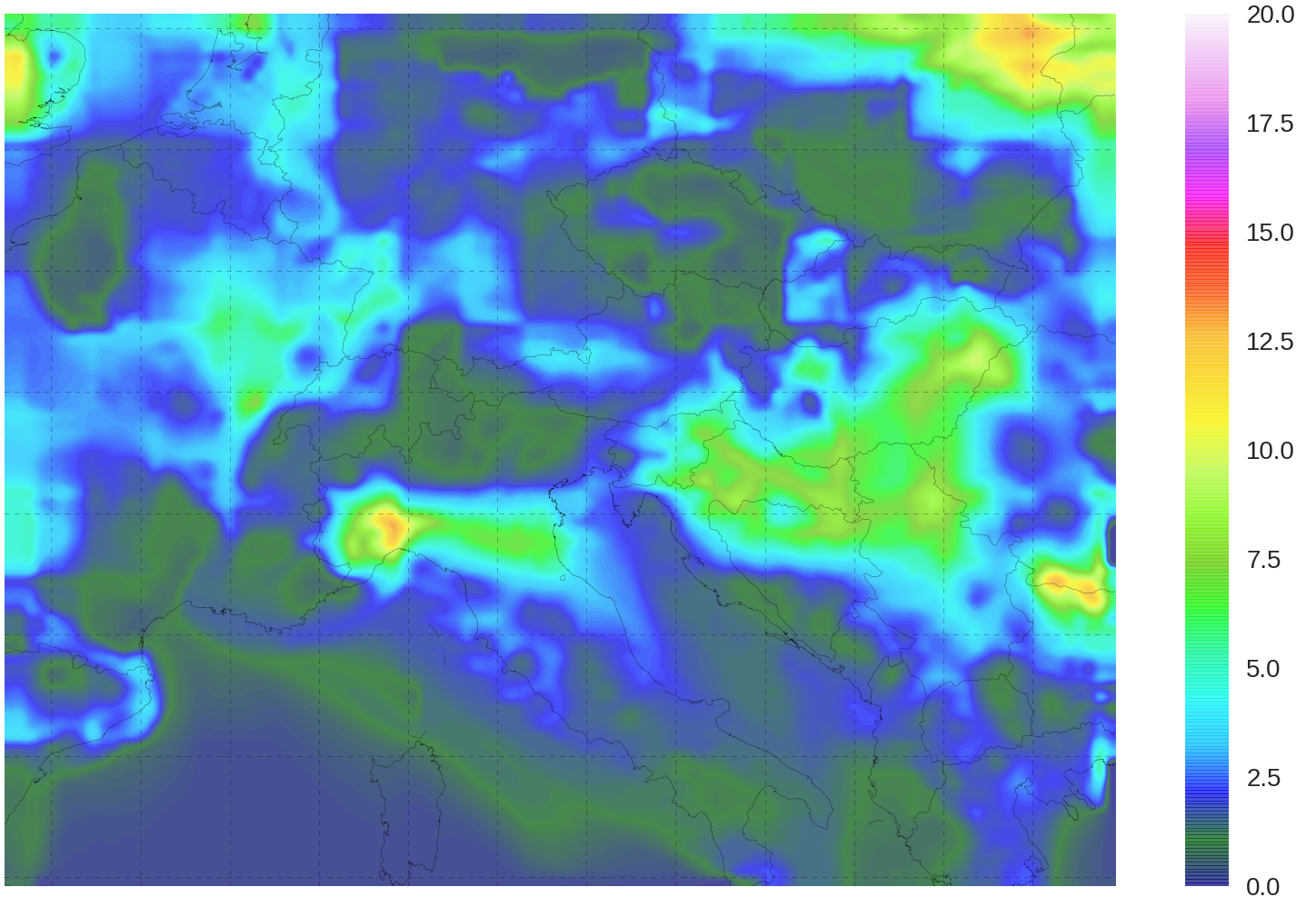
Weather Research and Forecasting model coupled with chemistry. It is a state-of-the-art air quality model in which the chemistry (emission, transport, mixing, and chemical transformation of trace gases and aerosols) is simultaneously simulated with meteorology (a fully “online” coupling). The model can be used for various environmental application for both research and air quality forecasting needs.
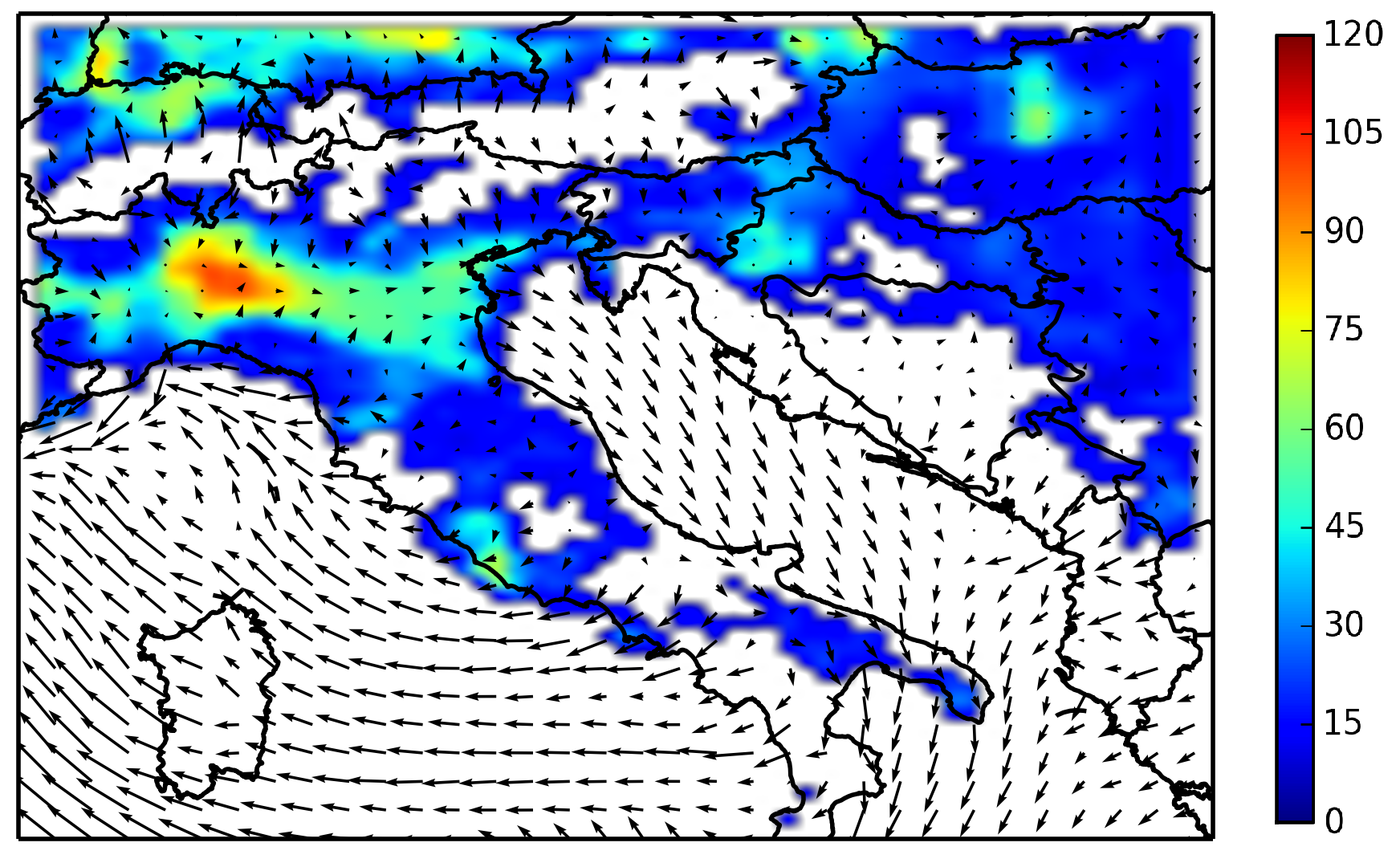
It is a multi-scale photochemical modeling system for both gas and particulate air pollution. In „offline“ coupling with meteorological model (in AMEGO we use WRF model), the model is capable of simulating air quality over many geographic scales, can treat a variety of inert and chemically active pollutants - photochemical gases, particulates, mercury and toxics and conduct source attribution, sensitivity, and process analyses.
CMAQ (Community Multiscale Air Quality) is a multi-scale photochemical air quality modeling system developed by the U.S. Environmental Protection Agency. It is designed to simulate both gaseous and particulate air pollution across local, regional, and continental scales.
In “offline” coupling with a meteorological model (in AMEGO, the WRF model is used), meteorological fields are preprocessed and then applied in the chemical transport calculations. CMAQ simulates atmospheric transport, chemical transformation, deposition, and removal processes.
The model can treat a wide range of inert and chemically active pollutants, including photochemical gases (O₃, NOₓ, VOCs), particulate matter (PM₁₀, PM₂.₅), secondary aerosols, mercury, and other toxics. It also supports source attribution, sensitivity studies, emission scenario analysis, and detailed process analysis.
AERMOD is a steady-state Gaussian plume air dispersion model developed by the U.S. Environmental Protection Agency for regulatory and near-field air quality assessments.
The model uses site-specific meteorological input processed through AERMET, incorporating surface and upper-air observations or prognostic model data. It accounts for boundary layer structure, terrain effects, and surface characteristics to simulate pollutant dispersion from industrial and other emission sources.
AERMOD is designed for short-range applications (typically up to 50 km) and computes pollutant concentrations based on continuous plume formulations under steady-state conditions. It is widely applied for regulatory compliance, impact assessments, and permitting analyses.
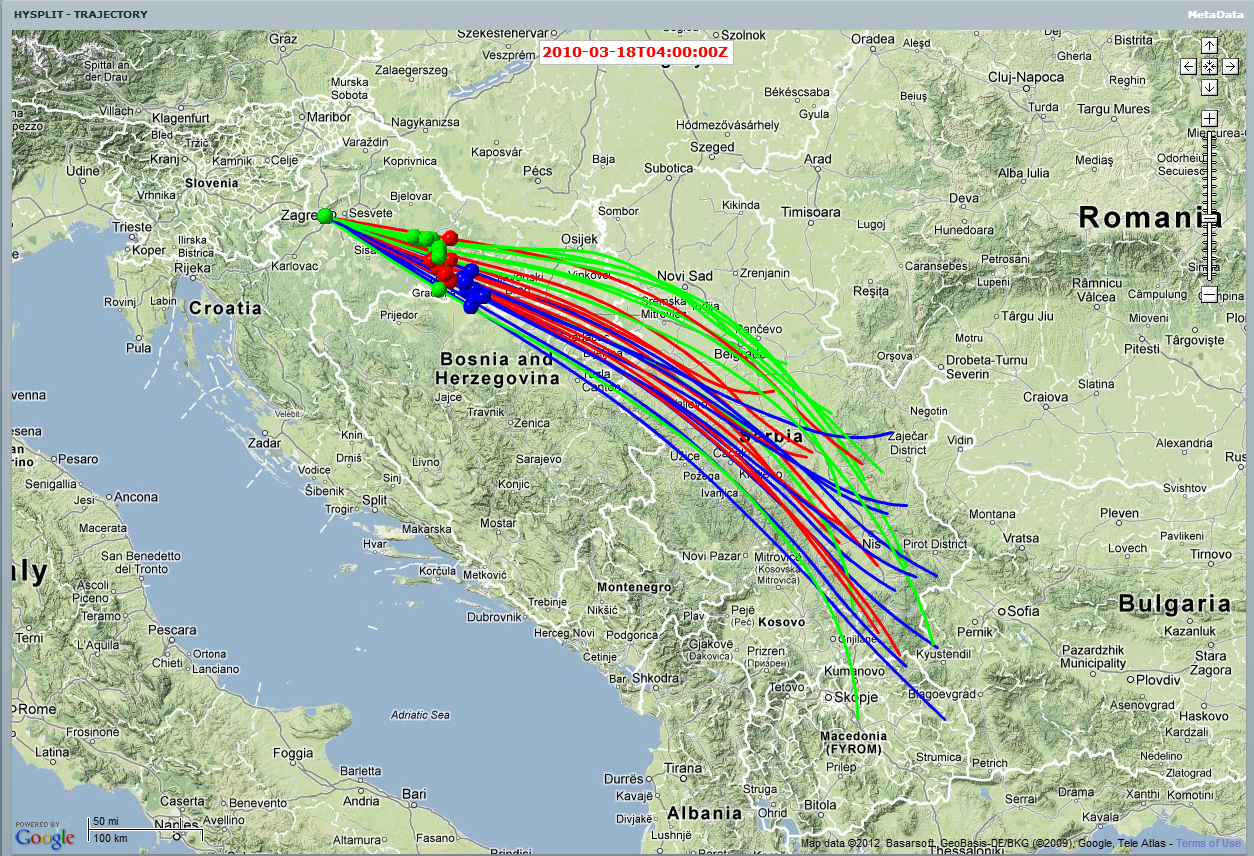
It is a system for computing (backward) atmospheric trajectories, complex dispersion and simulations using either puff or Lagrangian particles. The meteorological input is used from archived dana sources at National Centers for Environmental Prediction (NCEP) i.e., global latitude/longitude data from GFS model at 1° horizontal resolution.